

Tabularia
My own product
Revise a whole book without losing context.
Writers need to change a passage without losing sight of the book around it. I built Tabularia around that problem, keeping manuscript structure, related passages, and revisions connected as the work changes.
Writing changes at several scales.
A writer may be adjusting a sentence, following a character through several chapters, or considering a different version of a scene. The software needs to support those changes while making it clear where each passage belongs and which version is being edited.
Keep the page and the structure together.
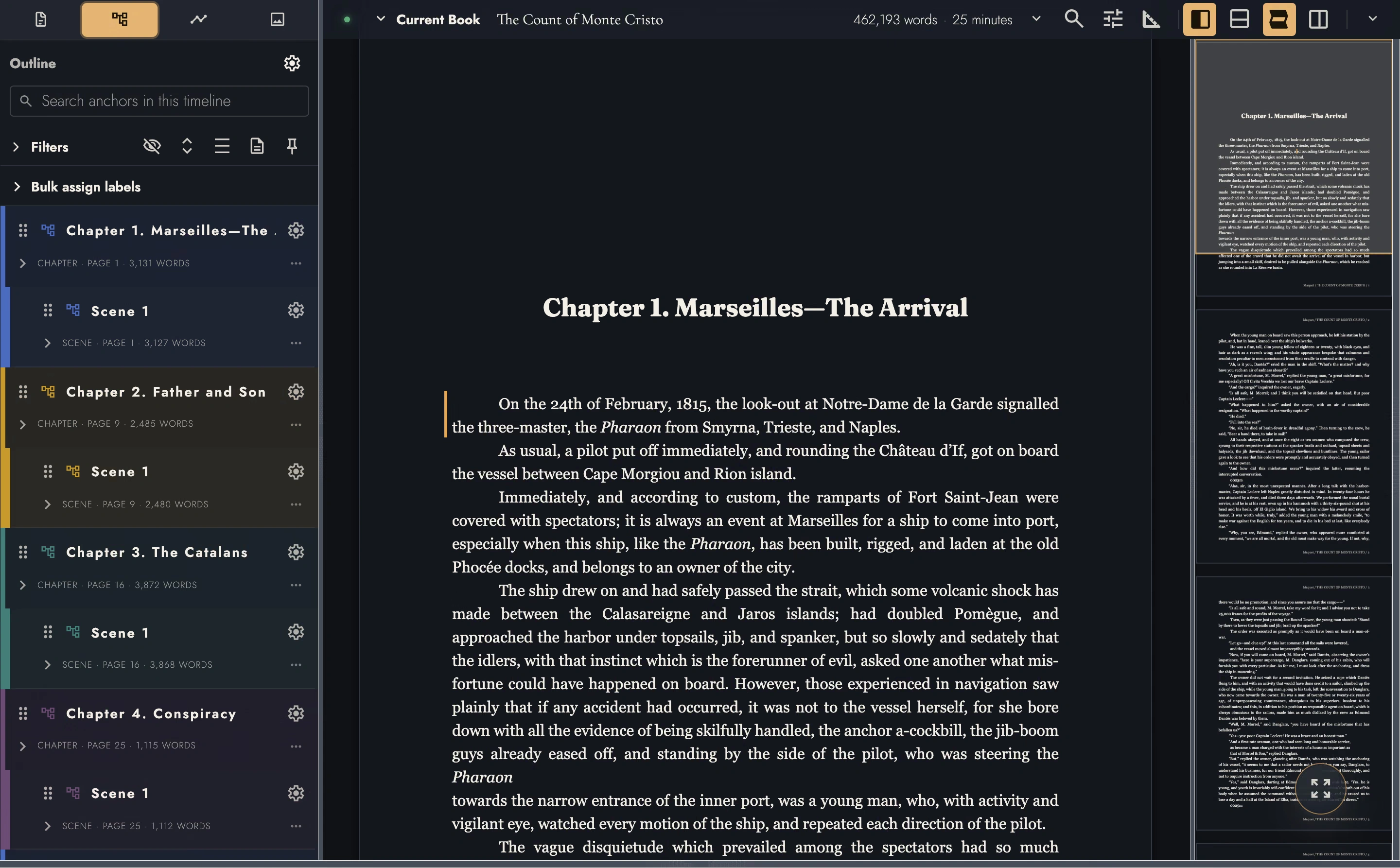
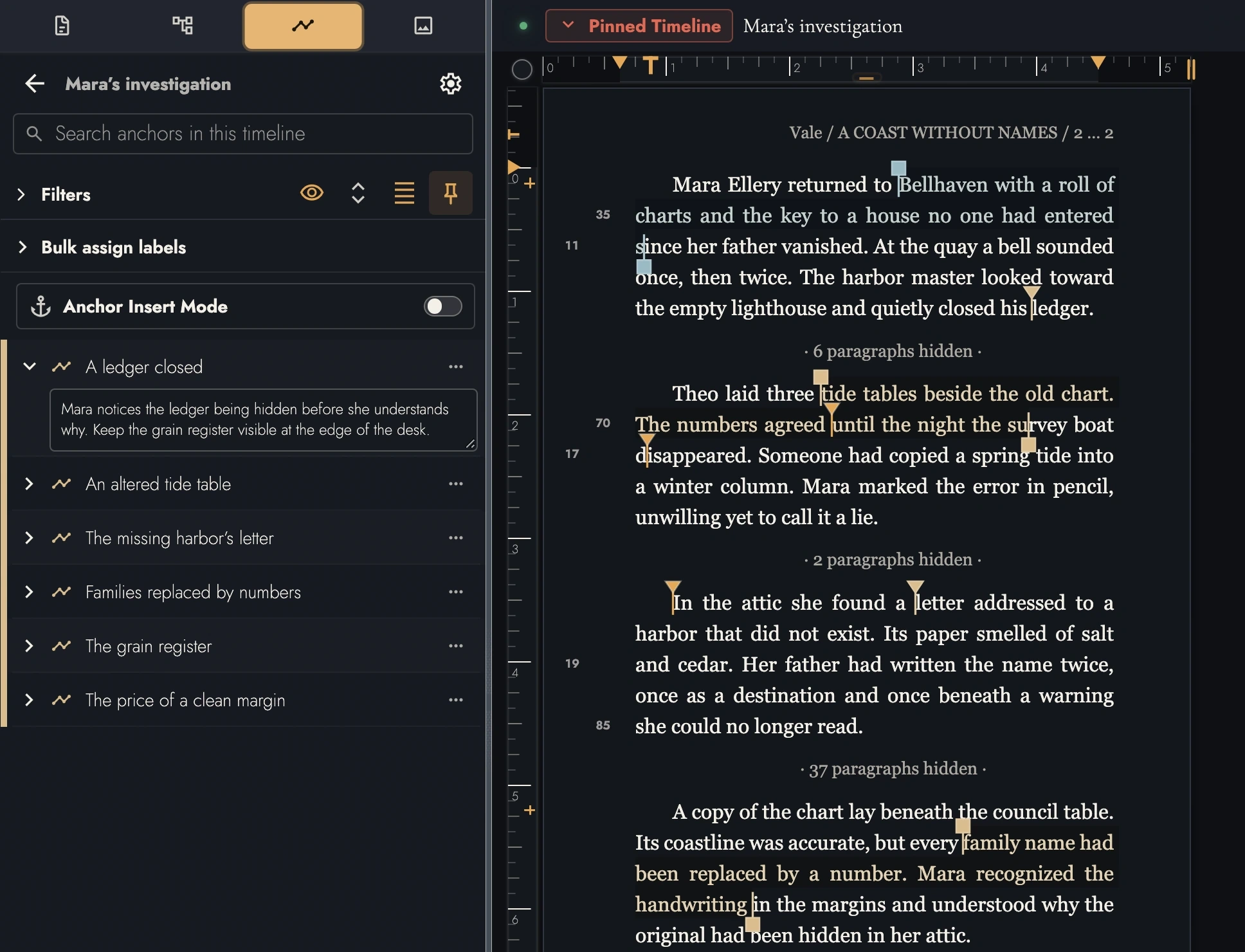
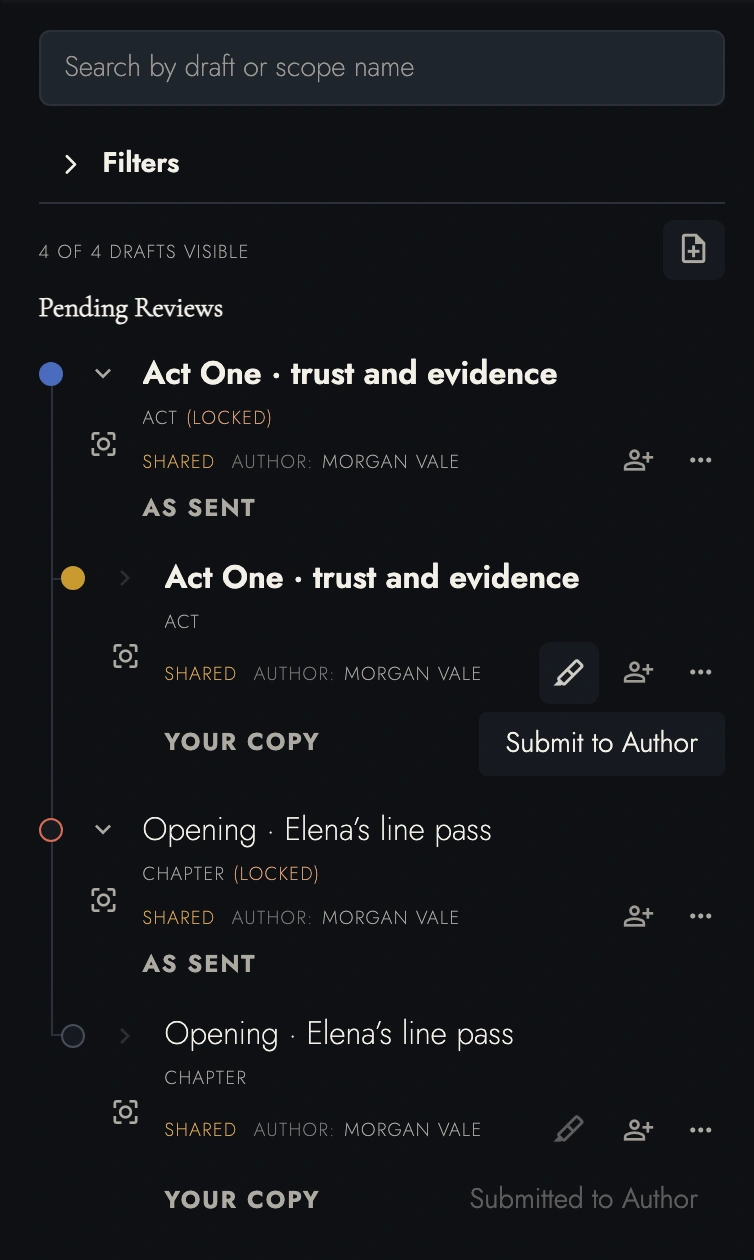
I built the manuscript surface, outline, and minimap as parts of one connected workspace. A timeline brings related passages together across the book. Alternative versions can be compared with the current manuscript, with individual changes reviewed before they are merged back. Editor review keeps comments and proposed changes close to the writing.
Move between a passage and the whole book.
Writers can move between a passage and the whole book, follow a story thread across chapters, and try another version without immediately replacing their current work.
From the interface to stored revisions.
I handle product design and development across the interface, manuscript model, revision history, local storage, cloud synchronization, and publishing tools. I check how changes behave through navigation, interruptions, and revisions from another session, with automated tests and browser checks that include long manuscripts and mobile layouts.
Let AI assistants work in the book, under the writer’s control.
Tabularia runs a remote MCP server on Cloudflare, with OAuth and more than 100 tools, so Claude, ChatGPT, and Cursor can read a manuscript and work in it. It ships as plugins for each assistant, with skills that package expert workflows such as structural reads and continuity checks on top of the raw tools.
Assistants write into separate drafts and edit proposals, not straight into the book. Changes need confirmation and can be undone, and a snapshot is taken before anything touches the main text, so the writer reviews what an agent did before it becomes part of the book.
Teams decide how much AI to allow. Policies stack at the account, team, and project level, and a project can only narrow its team’s rules. Admins can turn off individual tools and restrict guests and contractors, and every policy change goes to an audit log that records who made it without storing manuscript text.
Before a book is published to the web, Claude or GPT reviewers screen its content. The pipeline respects each owner’s provider restrictions, including on retries, and sends anything it can’t resolve to a person. I use AI in my own development work too, and I own the design, code review, testing, and releases.
Where this applies to your product.
If your customers work with complex information or changes that need review, the interface and the underlying data model need to agree. I can help you work through those decisions, build the workflow, and check what happens when people revise, interrupt, or resume their work.
7+ months of sustained development to build and launch Tabularia, with ongoing development and maintenance.
How I connected AI assistants to the writing
I built Tabularia’s MCP integration so assistants such as Claude Code and ChatGPT can search manuscript passages and retrieve context from Chapters, Scenes, and other Working Scopes. The integration uses bounded reading windows, paginated results, and links back to source passages, with explicit notices when results are incomplete.